

Dong Thap Accelerates Social Housing, Tackles Real Estate Market Bottlenecks
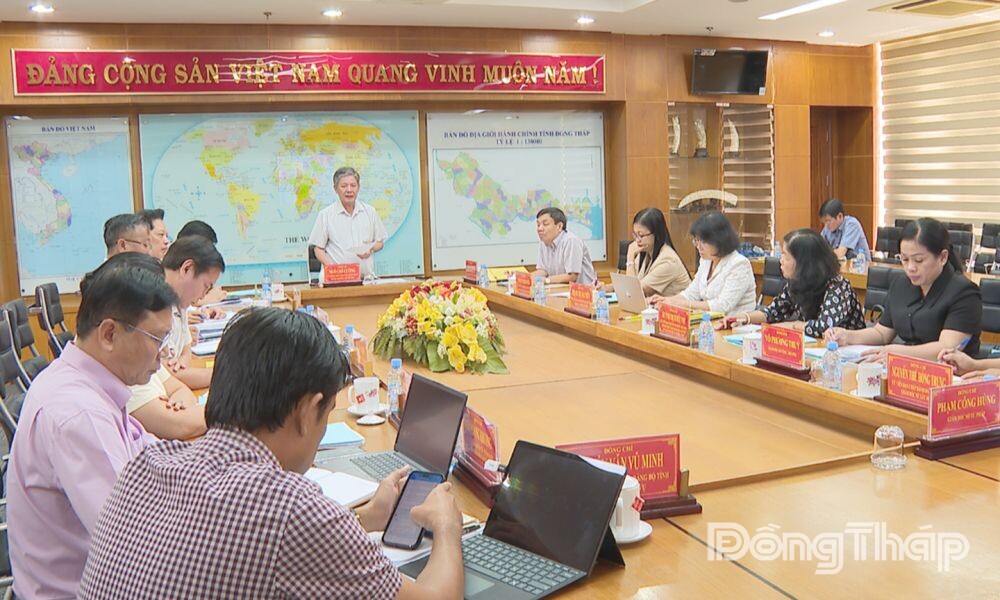
(DTO) Mr. Ngo Chi Cuong, member of the Party Central Committee, Secretary of the provincial Party Committee and Head of the Steering Committee on housing policy and the real estate market of Dong Thap, on April 21 chaired the committee’s first meeting to review reports, discuss and set directions for issues related to the sector in the province.
The meeting was attended by Mr. Phan Van Thang, Standing Deputy Secretary of the provincial Party Committee and Chairman of the Vietnam Fatherland Front Committee of the province; Deputy Secretary of the provincial Party Committee and Chairman of the provincial People’s Committee, Pham Thanh Ngai; and Vice Chairman of the provincial People’s Committee Nguyen Thanh Dieu.
Under the province’s targets, Dong Thap aims to build at least 12,200 social housing units by 2030, averaging about 2,500 units per year.
As of the end of March 2026, the province had recorded 43 commercial housing projects and 12 social housing projects with more than 4,700 units. Of these, four projects with 1,175 units have been completed, while eight projects with 3,574 units are under construction.
In addition, the province is calling for investment in three more social housing projects with a total scale of over 17,200 units.
Dong Thap has identified social housing and official residences as key pillars of its social welfare policy, while the real estate market and commercial housing are seen as important drivers of economic growth. These sectors are being oriented towards coordinated and balanced development to ensure stability and sustainability.
At the meeting, members of the Steering Committee highlighted several challenges, particularly bottlenecks in compensation and site clearance, which have affected project implementation progress.
Concluding the meeting, Party Secretary Ngo Chi Cuong urged relevant sectors and localities to focus on removing obstacles and accelerating administrative reforms, including placing social housing projects under “green lane” and “priority lane” mechanisms to shorten processing time.
He also assigned relevant agencies to study specific mechanisms to encourage business participation in investment, strengthen monitoring and supervision of project progress, promptly address difficulties faced by investors, and carry out procedures related to investment, land, planning, construction and environment in parallel, thereby expediting project implementation and creating momentum for the province’s socio-economic development.
By HOAN QUAN
Translated by X.QUANG